
Pound jumps on a UK jobs surprise as oil swings on Iran headlines
Britain's jobs market beat expectations on Tuesday and the pound jumped, pushing the euro to its weakest level against sterling since the spring of last year. Oil gave traders a second shock. Brent ran close to $112 on new attacks around the Gulf, then fell sharply on reports of a compromise plan between Washington and Tehran.
It was a day of two very different stories. In London, a stronger than expected labour report made a Bank of England rate rise early next month look close to certain, and by the New York morning sterling was leading the major currencies against the dollar. In the energy market, the risk premium that has built up during the Iran war was on full display: Brent touched a five month high in the European morning, gave back almost six dollars in a few hours, and then climbed partway back. The dollar slipped as fresh doubts about the AI trade hit equities, the Canadian dollar rallied after Alberta voted to stay in Canada, and gold spent the day stuck in its familiar range.
Free on Telegram. Get short sterling, oil and gold updates through the trading day on the Forexuro channel.
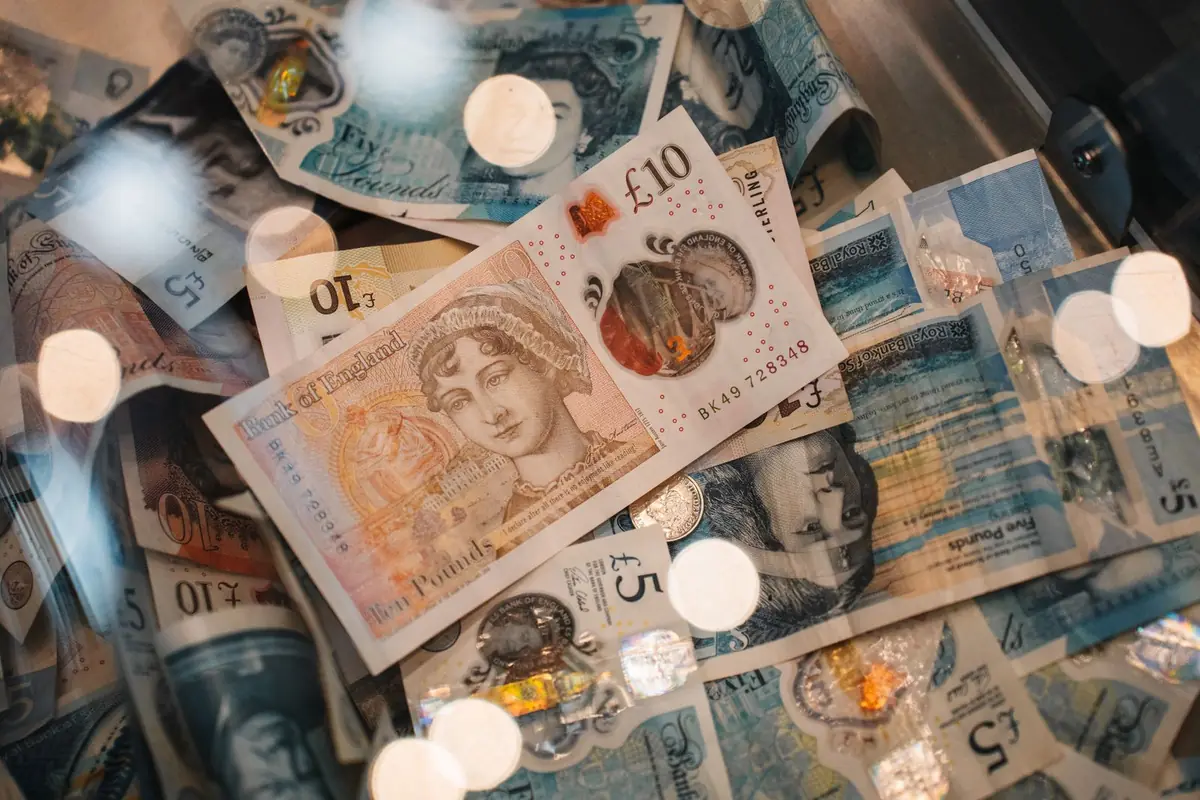
A jobs report that surprised on the upside
The UK unemployment rate fell to 4.7% in the three months to August, the Office for National Statistics said, while the employment rate rose to 75.3%. City economists had expected unemployment to rise to 5%, the Guardian reported, and the reading was the lowest since the middle of last year. The early count of payrolled employees rose by 13,000 in September to 30.3 million, and the prior month was revised from a fall of 26,000 to a small gain of 1,000, MUFG's Lee Hardman noted. That made it the strongest monthly payroll reading since last summer, although the September number is provisional and could change next month.
Pay was the other part of the story. Regular earnings, which strip out bonuses, grew 3.7% from a year earlier, ahead of the 3.6% forecast in a Reuters poll, and private sector regular pay picked up to 3.0% from 2.9%, Reuters reported. That private sector figure matters because it is the one the Bank of England watches most closely for signs that higher energy costs are feeding into wages. Total pay, including bonuses, slowed to 3.7% from 3.9%, the weakest pace in nearly six years according to the ONS, so the picture is not one way.
The softer details were real. Job vacancies fell by 21,000 to 691,000 in the three months to September. Outside the pandemic, that is the lowest level since 2014, and the ONS said smaller firms continue to blame higher labour costs for holding back hiring. The claimant count also rose to an estimated 1.701 million. Economists at the Institute of Chartered Accountants described the labour market as running on idle, and Lloyds economist Nikesh Sawjani argued that the report reinforces the case for a November move without making a strong case for a faster pace of hikes after that.
Sterling jumps as hike bets firm
Currency traders focused on the headline beat. The pound rose 0.66% to $1.339 by the New York morning, Reuters reported via Investing.com, and the euro fell to 0.8398 pounds, its lowest since late May last year, according to MarketWatch. Money markets were almost fully pricing a quarter point rise in Bank Rate from 3.75% when the Bank of England announces its next decision, and Reuters said investors were fully pricing four hikes by the middle of next year. "The UK economy is surprising on the upside," said Tommy von Brömsen, FX strategist at Handelsbanken.

Not everyone thinks the market has it right. The consultancy Capital Economics expects Bank Rate to peak at 4.25%, well below the 4.75% to 5% that markets see by the middle of next year, the Guardian reported, and some members of the Monetary Policy Committee have argued for waiting to see whether wage and price pressures persist. MUFG expects a hike next month and a second one early next year, and says the pound should stay supported as long as next week's Budget, the first from Chancellor John Healey, does not damage confidence in the government's fiscal plans. The bank added that EUR/GBP is trying to break into a lower range between 0.8200 and 0.8400 that last held from late 2024 into the spring of 2025. Our guide to GBP/USD and the pound explains why cable reacts so strongly when UK rate expectations shift.
Oil swings close to six dollars
The energy market delivered the most violent move of the day. Brent rose to $111.05 a barrel in the European morning, its highest since May, after Yemen's Houthis said they had attacked Saudi energy, airport and military targets, including an Aramco site in Yanbu and the Shaybah oilfield, Reuters reported via CNBC. Saudi authorities did not immediately confirm the claims. Kpler said at least 18 vessels had been reported attacked over two weeks, and ING analysts said prices suggest the market is pricing in a significant risk premium. Deutsche Bank noted that oil contracts for next year had hit record highs, implying expensive crude deep into 2027, NBC News reported.
Then the mood flipped. Israel's Channel 12 reported that a compromise proposal presented to senior Iranian officials by Pakistan's army chief had won American approval and preliminary agreement from Tehran, FXStreet reported. The plan reportedly includes passing to Iran the interest earned on about $6 billion of Iranian funds frozen in Qatari banks, and a confidential visit by the International Atomic Energy Agency to Iranian nuclear sites. None of it has been officially confirmed. Brent fell about 3% to $106.18 by the early afternoon in London, nearly $6 below its intraday high, Anadolu Agency reported, and European gas prices dropped 3% from their highest level since 2022. By the New York lunchtime, Brent had recovered to about $108.7, a sign that traders are not yet ready to price out the war.

The dollar slips on AI doubts
The dollar index fell 0.27% to 101.69, Reuters reported, as doubts about the AI trade resurfaced. Shares in South Korean AI services company Elice Group plunged 32% on their Seoul debut, and Nomura's Dominic Bunning said heavy equity inflows had been propping up the dollar, while investors are now more sceptical about whether AI companies can earn enough to justify their huge borrowing. FXStreet put the index near 101.55 later in the session, its lowest in about three weeks, with the 10 year Treasury yield down 5 basis points near 5.09% as oil retreated.
US data added to the softer tone. Housing starts fell 5.2% to an annual rate of 1.221 million units in September, well below the 1.305 million forecast in a Reuters poll, and single family permits dropped to their lowest since March 2023 as the 30 year mortgage rate averaged 7.40% last week, Reuters reported via Investing.com. The Federal Reserve meets next Tuesday and Wednesday. Traders see about a 17% chance of a hike at that meeting and a 92% chance of one in December, according to the CME FedWatch figures cited by FXStreet.

Euro, yen and loonie
The euro edged up 0.2% to $1.1232 against a weaker dollar, but it lost ground to sterling. The French government said overnight curfews in the worst hit areas of its biggest cities had brought some calm after the country's worst unrest in years, with more protests planned for the weekend. Handelsbanken's von Brömsen told Reuters he expects the bearish view on France to persist and sees much more euro weakness still to be priced in.
The yen firmed to 158.04 per dollar after an auction of 20 year Japanese government bonds drew record demand. State Street's Masahiko Loo said Japanese bonds are starting to look like a relative haven from Europe's political and fiscal troubles.
The Canadian dollar rose 0.42% to C$1.405, its strongest in almost a month, after Albertans voted by a wide margin to remain part of Canada. Unofficial results put support for staying at roughly 76%, with the official tally due later this month, Pound Sterling Live reported. Prime Minister Mark Carney called it a clear choice for unity. The vote had been widely expected, so Corpay's Karl Schamotta argued that the bigger driver is the Bank of Canada: swaps markets put the odds of a hike next Wednesday at about 80%, after the bank's surveys showed consumers' five year inflation expectations jumping to 3.91% from 3.39%. Standard Chartered and CIBC still expect a hold.
Gold stuck between $4,100 and $4,200
Gold spent the day in a tug of war between oil and yields. Spot gold fell 0.51% to $4,118.76 an ounce in the morning as the oil spike stoked inflation fears, Reuters reported, then recovered as crude dropped and was unchanged at $4,138.54 by mid session in New York, according to Reuters via Yahoo Finance. The metal is still down about 26% from its record of $5,594.82 set in January. FXStreet noted an intraday low near $4,111 and said gold has been largely trapped between $4,100 and $4,200 since the start of the month, below its 50, 100 and 200 day moving averages, with $4,200 the first resistance and $4,000 to $3,950 the support zone below a break of $4,100. Silver did better, up 1.5% to $57.92.
The logic is simple. Higher oil means more inflation, which keeps the Fed leaning toward hikes and Treasury yields near 5%, and that makes a metal that pays no interest less attractive. StoneX's Bob Haberkorn told Reuters that Treasuries currently look more favourable than gold as a safe asset. Our guide to trading gold and XAU/USD covers why the metal often reacts to real yields more than to headlines.
What to watch
- Wednesday: UK inflation for September, expected to rise to 3.4% from 3.1%, according to the Guardian. A strong reading after Tuesday's jobs beat would make a November hike look even more certain. ECB President Christine Lagarde speaks later in the day, and New Zealand's quarterly inflation follows in the evening in London, according to the Monex Europe calendar.
- Thursday: US weekly jobless claims and the euro area's early consumer confidence reading.
- Friday: Japan's national inflation and flash PMIs for the euro area, the UK and the US.
- Any day: official word on the reported US and Iran proposal. Confirmation could knock oil lower again, while a denial or new attacks on shipping could send Brent back toward its highs.
- Next week: the UK Budget, the Bank of Canada and the Fed on Wednesday, and the ECB on Thursday, with US PCE inflation data also due.
The common thread is energy. Central banks in Britain, Canada and the United States are all leaning toward tighter policy because of the oil shock, so any lasting change in crude prices feeds straight into rate expectations and from there into currencies. Our guide to central bank rate decisions explains how traders position around these meetings.
What this means for signal traders
- Respect the pound's momentum, but mind Wednesday. GBP pairs have moved quickly on UK data, and the inflation release can either extend the move or trigger a sharp reversal within minutes.
- Watch EUR/GBP near 0.8400. The cross is testing the top of a lower range flagged by MUFG. French headlines and UK data are pushing in the same direction for now.
- Treat oil headlines as event risk for CAD, gold and the dollar. Tuesday showed Brent can move about $6 in a few hours on unconfirmed reports, and that spills over into USD/CAD and XAU/USD.
- Use the gold range, not a guess. With gold boxed between $4,100 and $4,200, stops placed just beyond those levels are easy targets when volatility spikes. Size each position from the stop distance using our stop loss and take profit guide.
- Expect wider spreads around releases. Spreads often widen around data and breaking geopolitical news, so check them before entering.
None of this predicts the next move. It describes the conditions any forex or gold signal will face in the days ahead.
Official sources
Official pages for the decisions, data and schedules behind this report.
- Bank of England: interest rates and Bank Rate, the current Bank Rate and the latest decision.
- Office for National Statistics: inflation and price indices, the official UK CPI releases.
Sources
- Office for National Statistics: Labour market overview, UK
- The Guardian: Surprise drop in UK unemployment to 4.7%
- Reuters via US News: UK jobs market shows some recovery signs as BoE mulls rate hike
- Reuters via Euronext: Sterling rises as strong labour market data reinforces rate hike bets
- MarketWatch: Sterling hits near 17 month high against euro
- MUFG Research: FX Daily Snapshot
- Reuters via Investing.com: Dollar dips on AI worries, euro edges up despite French unrest
- Reuters via CNBC: Brent hits five month high as attacks on ships, Saudi sites fuel supply worries
- NBC News: Oil prices move higher as traders adjust to a new normal in the Middle East
- FXStreet: WTI oil slides as US and Iran compromise plan eases Middle East risks
- Anadolu Agency: Brent falls 3% as oil prices reverse earlier rally towards $112
- Reuters via Investing.com: US single family housing starts plunge
- Pound Sterling Live: Canadian dollar outperforms on Alberta vote
- Corpay: Albertans reject separation vote
- Reuters via Yahoo Finance: Gold steady as investors await Fed rate signals
- FXStreet: Gold rebounds as oil reverses sharply on positive US and Iran headlines
- Monex Europe: Week Ahead (PDF)
- Price data for the charts: Yahoo Finance (GBPUSD=X at the New York close; BZ=F 15 minute closes; EURUSD=X, GBPUSD=X, JPY=X, CHF=X, CAD=X, AUDUSD=X and NZDUSD=X from the Monday New York close to the latest Tuesday reading).
Keep reading
Interest rates and currencies · CPI and PPI inflation data · Major pairs guide · VIP plans