
Yen has its best day in a month as gold slides and oil hits $112
The Japanese yen had its best day in a month as investors pulled back from risk, and gold fell to its lowest level since early August below $4,100 an ounce. Brent crude climbed to a five month high above $112 after more Houthi attacks in Saudi Arabia and a US order for some diplomats to leave the kingdom.
Thursday's trading had a defensive feel from the start. Asian stock markets fell sharply as doubts about the payoff from heavy AI spending returned, oil jumped on fresh signs that the Middle East conflict is widening, and money moved into government bonds. That pulled Treasury yields lower, which in turn took some of the shine off the dollar even though it usually benefits when markets turn nervous. The yen was the big winner among the majors. Gold went the other way, because the same oil rally that unsettles investors also makes it more likely that the Federal Reserve keeps raising interest rates. US jobless claims added another twist, falling to one of their lowest readings in nearly six decades.
Free on Telegram. Get short yen, gold and oil updates through the trading day on the Forexuro channel.
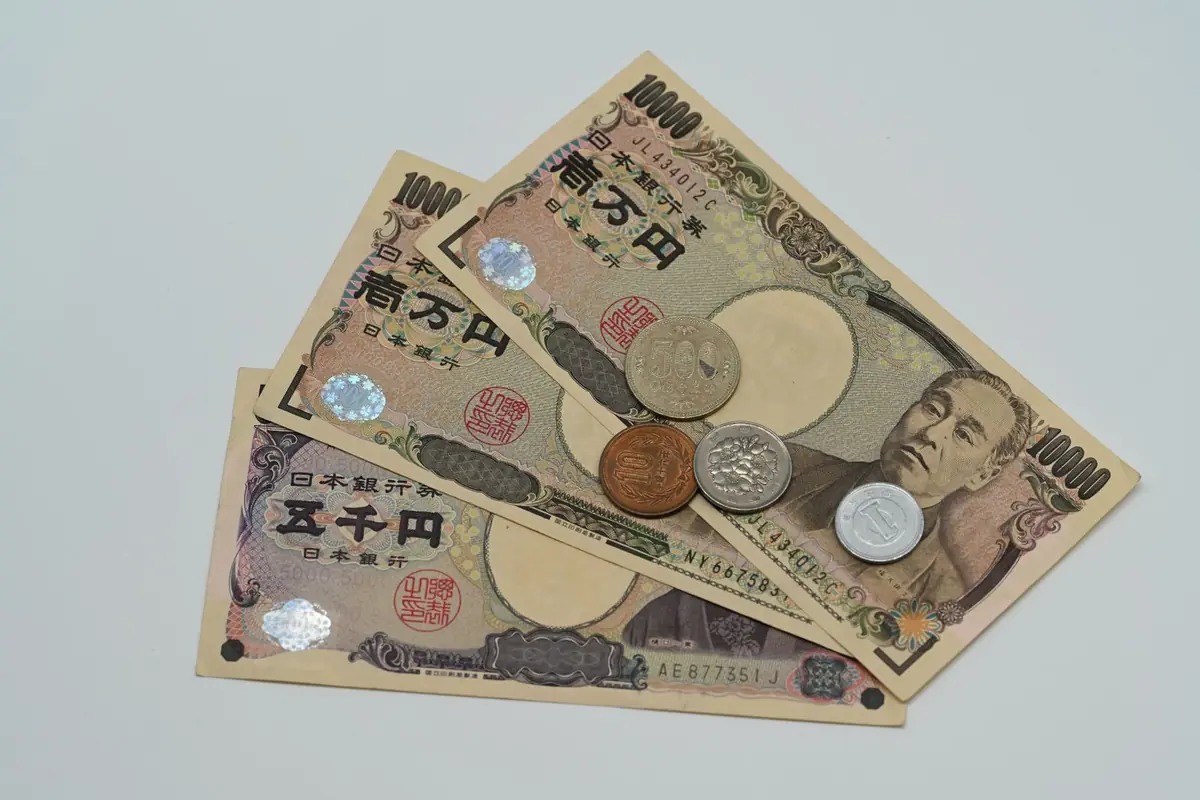
The yen breaks out of its range
The yen had spent most of October stuck in a narrow band, but it broke higher as the session went on. The dollar fell 0.6% to 157.27 yen, on course for its biggest daily drop since late September, and the yen also gained against the euro, the pound and the Australian dollar, Reuters reported via CNBC. USD/JPY traded at its lowest level since early October, according to FXStreet.
Investors had plenty of reasons to be cautious. Fragile equity markets, crude near its highest levels since the spring, the war in the Middle East and worries that the AI boom may not deliver the returns priced into technology shares all pushed money toward safer assets. Japan's Nikkei 225 lost around 2% and South Korea's Kospi fell more than 3%, with chipmakers leading the declines, according to the Saxo morning briefing.
Chris Scicluna, head of economic research at Daiwa Capital Markets, told Reuters that some of the upside risks to Japanese interest rates had probably faded because of concerns about the AI build out and France. The Bank of Japan is expected to leave its policy rate at 1.25% next week, and markets price a steady run of increases that would take borrowing costs to around 2% by the end of 2027. Lower Japanese bond yields would normally weigh on the yen, so the size of Thursday's move shows how much of it came from safe haven demand rather than from rate expectations.

The dollar slips as yields fall
The dollar index fell to its lowest level in three weeks near 101.50, FXStreet reported, and the US currency has now lost ground against a basket of currencies for two weeks in a row. The reason it did not benefit from the cautious mood is the bond market. The 10 year Treasury yield closed Wednesday at 5.12% and slipped back to 5.08% early on Thursday, while the 2 year yield eased below 4.78% after peaking at 4.83% the day before, Saxo said. A solid auction of 20 year notes helped.
Positioning also matters. Investors hold a near record bullish bet on the dollar, according to LSEG data cited by Reuters, built on the idea that the AI boom keeps the US economy strong and interest rates high. Recent wobbles in AI related stocks and debt have shaken that confidence a little, and analysts at ING said in a note quoted by FXStreet that they still favour "a gradual and orderly dollar decline rather than a sharper depreciation." Our guide to interest rates and currencies explains why bond yields often matter more for a currency than the general mood in markets.
The euro barely moved. It held near $1.1234, still weighed down by the political crisis in France, where the 10 year bond yield closed above 5% for the first time in more than 24 years and the gap over German yields reached its widest since 2012. Brent Donnelly, president of Spectra Markets, summed up the stalemate for Reuters: "The euro cannot sell off and it cannot rally." Sterling held at $1.3403, close to the one month high of $1.3409 it reached earlier in the week after hotter than expected UK inflation figures.
Jobless claims near a six decade low
The one solid piece of US data on Thursday pointed to a labour market that is still holding up. Initial claims for unemployment benefits fell by 6,000 to a seasonally adjusted 194,000 in the week to last Saturday, below the 200,000 that economists expected, investingLive reported from the Labor Department release. The four week average dropped to 197,750. Continuing claims rose by 25,000 to 1.728 million, a sign that people who lose their jobs are taking a little longer to find new ones.
The reading is close to the 189,000 recorded in July, which was the lowest since the late 1960s, CNBC noted. Hiring has been weak, with payrolls rising just 29,000 in September and unemployment at 4.2%, but employers are still reluctant to let workers go. For the Fed, that removes one argument for caution: officials have described the labour market as a source of strength and are focusing on inflation, which remains well above the 2% target.
Oil hits a five month high
Energy was the main driver of the day. Brent crude rose $3.19, or 2.9%, to $112.01 a barrel by early afternoon in London after touching $112.68, its highest since mid May, while US crude gained $2.41 to $99.56 after briefly trading above $100, Reuters reported. Yemen's Houthis struck several targets in Saudi Arabia on Wednesday, killing at least one person at a civilian airport in Dammam and two in a drone attack on a Saudi oil field. Saudi Aramco told staff to evacuate its Dhahran headquarters and work remotely, people familiar with the matter said.
The United States ordered non emergency government staff and their families to leave Saudi Arabia, and The New York Times reported that US and Israeli military planners have prepared for renewed strikes on Iran after the US midterm elections, CNBC reported. Asked about Iran, President Donald Trump said the US was not negotiating and that something would happen "fairly soon." Iran's Revolutionary Guards said four vessels in the northern Gulf were hit and caught fire and three more struck mines west of the Strait of Hormuz.
Not every signal points to tighter supply. Morgan Stanley estimated that Middle East crude exports reached around 17 million barrels a day last week, above pre conflict levels, but PVM analyst Tamas Varga told Reuters that the attacks more than offset that and that he expects no de escalation before the midterms. Refined products remain the tightest part of the market, with US gasoline stocks at their lowest since 2014, Saxo said.

Gold falls to its lowest since August
Gold could not use the weaker dollar or lower yields. Spot gold fell 1.4% to $4,084.25 an ounce by early afternoon in London after dropping to its lowest since early August, and US gold futures lost 1.2% to $4,100.30, Reuters reported via MarketScreener. Silver slid 3.6% to $55.89. The logic is simple: higher oil feeds inflation, inflation keeps the Fed leaning toward more hikes, and higher rates make a metal that pays no interest less attractive. Last week's US consumer and producer price data were both hotter than expected.
Traders see little chance of a move at the Fed meeting next week but price a high chance of a quarter point hike in December, according to CME's FedWatch tool. Goldman Sachs expects that December rise to take the policy range to 4.00% to 4.25%, CNBC reported. There is still support underneath: holdings in gold ETFs rose by 11.4 tonnes this week to a four year high, according to Bloomberg data cited by Saxo, which also noted that gold has tested the $4,100 area several times this month. Reuters technical analyst Wang Tao flagged a target at the mid October low near $4,073 and resistance at $4,135. Floors that have held more than once are exactly the kind of level our guide to support and resistance describes, and our guide The Chart Patterns Playbook shows how traders mark breakouts and retests around levels like these.
What to watch
- Thursday evening: the euro area's early consumer confidence reading, and later the UK GfK consumer confidence survey.
- Friday: Japan's national inflation figures and flash PMIs for Japan, the euro area, the UK and the US, according to the Monex Europe calendar. The PMIs give the first look at how higher energy costs are hitting business activity.
- Over the weekend: any escalation involving Saudi Arabia or Iran, which could open oil, gold and the yen with a gap on Monday.
- Next week: the Fed, the Bank of Canada and the UK Budget on Wednesday, the ECB on Thursday, the Bank of Japan meeting and US PCE inflation data. Our guide to central bank rate decisions explains how markets usually trade into a run of meetings like this.
What this means for signal traders
- The yen is moving on risk, not on rates. USD/JPY fell even as Japanese yields eased, so headlines about stocks, AI and the Middle East may matter more for the pair than Bank of Japan comments in the days before the meeting.
- Do not assume a nervous market means a stronger dollar. When Treasury yields fall, the dollar can slip even on a cautious day, while the yen and Swiss franc pick up the safe haven flows.
- Gold is testing a floor it has defended before. Stops just below a level the whole market is watching can be swept quickly, so size positions from the stop distance rather than from the target.
- Oil is the link between all of it. A further rise in crude feeds rate hike bets, which weighs on gold and supports the dollar against the euro; a sudden calm in the Middle East could reverse those moves just as fast.
- Expect wider spreads around breaking news. Weekend headlines, Friday's PMIs and next week's central bank decisions can all thin liquidity.
None of this predicts the next move. It describes the conditions any forex or gold signal will face in the days ahead.
Official sources
Official pages for the decisions, data and schedules behind this report.
- Bank of Japan: monetary policy meetings, the meeting schedule, statements and minutes.
- US Energy Information Administration: petroleum and other liquids, official US oil inventory, production and price data.
- Federal Reserve: FOMC meeting calendars, scheduled rate decision dates, statements and minutes.
Sources
- Reuters via CNBC: Yen set for biggest rally in a month as investors shun the dollar
- FXStreet: Forex Today, US Dollar extends slide as US yields stretch lower
- Saxo: Market Quick Take
- investingLive: US initial jobless claims 194K vs 200K estimate
- CNBC: Jobless claims near the lowest since the 1960s
- Reuters via Yahoo Finance: Brent hits five month high on escalating Middle East conflict
- CNBC: Brent crude tops $112 as Trump says something will happen fairly soon on Iran
- Reuters via MarketScreener: Gold falls to more than two month low as oil fuelled inflation fears weigh
- Reuters via CNBC: Gold falls as oil rally fuels inflation worries
- Monex Europe: Week Ahead (PDF)
- Data for the charts: Yahoo Finance (JPY=X, BZ=F and GC=F daily closes).
Keep reading
Dollar index and gold · Major pairs guide · Gold signals guide · VIP plans